Centralized ESG Compliance: Track And Manage Sustainability
Use centralized ESG compliance software to track sustainability goals, streamline reporting, monitor performance, and ensure regulatory responsibility.
Most companies start managing ESG data in spreadsheets. Eventually, the spreadsheet breaks, the auditor asks questions nobody can answer, and the CFO wants to know why it took three people six weeks to produce a report.
ESG compliance software solves that problem. It centralizes your environmental, social, and governance data, maps it to the right reporting frameworks, tracks Scope 1, 2, and 3 emissions, and produces audit-ready disclosures without the manual chaos.
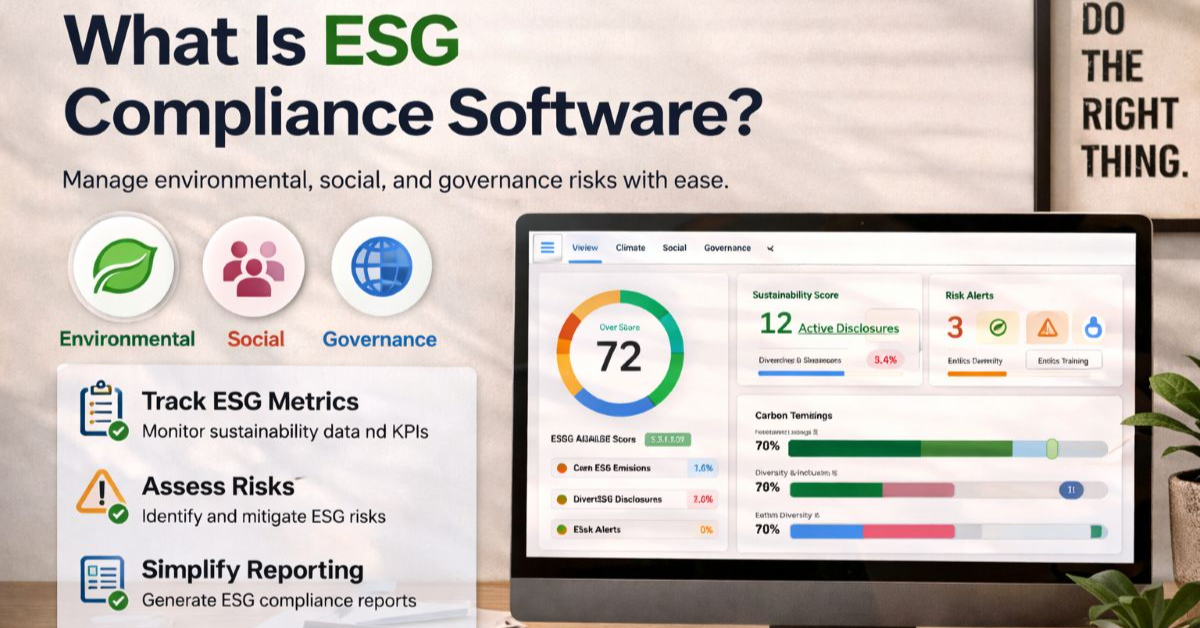
ESG compliance software is a platform that collects, validates, and reports on environmental, social, and governance data to a standard that satisfies regulators, auditors, and investors.
The key word is compliance. This is not a sustainability dashboard or a carbon calculator. It applies the same rigor you would expect in financial reporting: data lineage, internal controls, version history, and an audit trail.
Core capabilities every serious platform covers:
Automated data collection from ERP, HRIS, utility billing, and IoT systems
Carbon accounting for Scope 1 (direct emissions), Scope 2 (purchased energy), and Scope 3 (value chain)
Framework mapping to GRI, SASB, TCFD, ISSB/IFRS S1 and S2, ESRS, and CDP
Supplier engagement tools to gather Scope 3 data from vendors who do not respond to emails
Double materiality assessments for CSRD compliance
Disclosure management with XBRL tagging for digital regulatory submissions
Workflow, approvals, role-based access, and full audit trail
AI assistance for anomaly detection, framework drafting, and data gap identification
You need ESG compliance software if any of the following applies:
You are a large public company subject to SEC reporting and want defensible Scope 1 and 2 disclosures
You operate in California and face SB 253 (Scope 1, 2, and 3 disclosure starting 2026) or SB 261 (climate-related financial risk reporting)
You are a US-headquartered company with EU operations or EU customers above CSRD revenue thresholds
You are a supplier to a large company that has asked you to complete an ESG questionnaire
Your investors include institutional asset managers who submit ESG ratings to MSCI, Sustainalytics, or S&P Global
Your board or audit committee has asked for assured sustainability data
Small and mid-sized businesses without regulatory exposure can often manage with lighter tools such as Greenly, Normative, Plan A, or even a structured spreadsheet process, provided someone owns data quality. Once you hit regulatory triggers or investor scrutiny, lighter tools tend to break.
The regulations driving software adoption right now:
California SB 253: Requires companies with over $1 billion in revenue doing business in California to disclose Scope 1, 2, and 3 emissions. First Scope 1 and 2 reports are due in 2026.
California SB 261: Requires companies with over $500 million in revenue to report climate-related financial risk.
SEC Climate Rule: The SEC's original 2024 rule was largely stayed following legal challenges. Many companies are still preparing disclosures given investor expectations, even without a hard mandate.
CSRD and ESRS: The EU's Corporate Sustainability Reporting Directive applies to large EU companies and non-EU companies above certain EU revenue and employee thresholds. It requires disclosure across 12 European Sustainability Reporting Standards covering climate, biodiversity, water, workers in the value chain, governance, and more.
ISSB / IFRS S1 and S2: The International Sustainability Standards Board standards are being adopted by jurisdictions including the UK, Australia, Japan, and Canada. S2 covers climate-related disclosures.
CBAM: The EU Carbon Border Adjustment Mechanism requires importers to report the carbon content of certain goods entering the EU.
CSDDD: The EU Corporate Sustainability Due Diligence Directive requires large companies to conduct human rights and environmental due diligence across their supply chains.
The practical reality for US companies in 2026: California is the most immediate hard deadline. CSRD applies if you have meaningful EU operations. Investor expectations exist regardless of which rules apply to you.
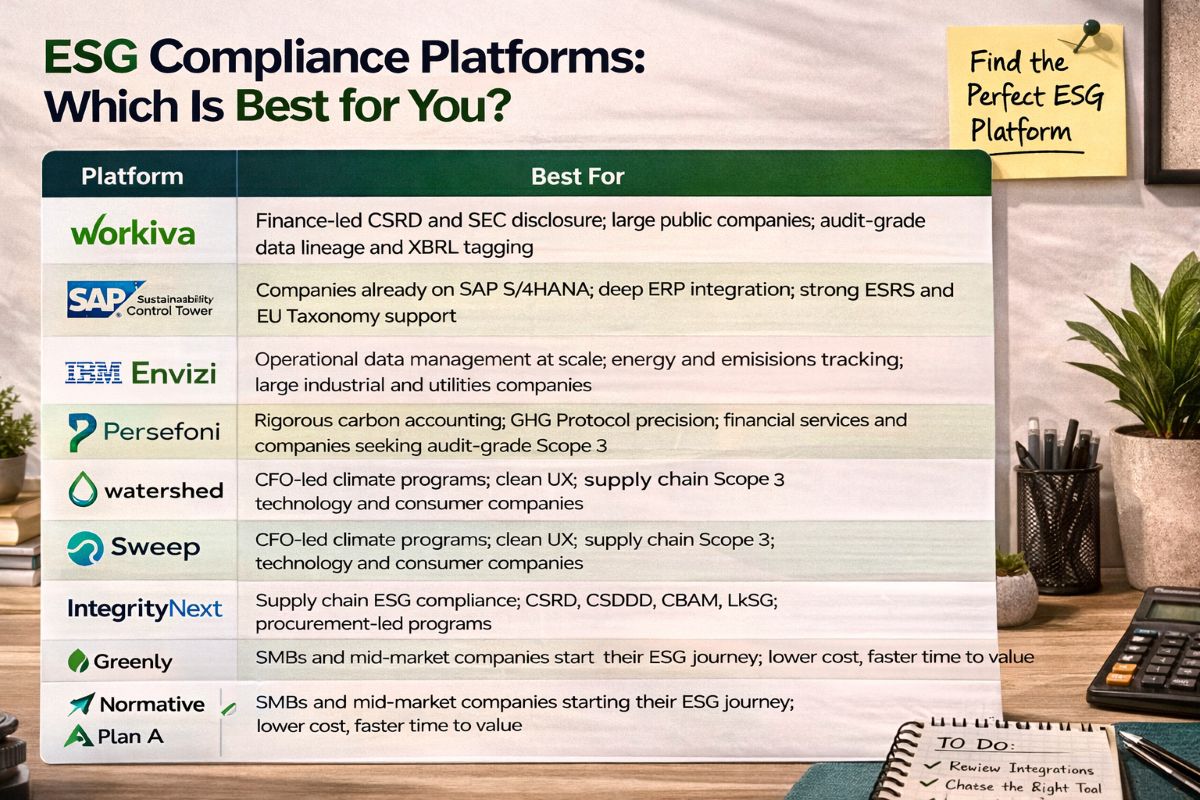
The platforms that consistently appear in analyst reports (Verdantix Green Quadrant, Forrester, IDC MarketScape) and in practitioner discussions:
Platform | Best For |
|---|---|
Workiva | Finance-led CSRD and SEC disclosure; large public companies; audit-grade data lineage and XBRL tagging |
SAP Sustainability Control Tower | Companies already on SAP S/4HANA; deep ERP integration; strong ESRS and EU Taxonomy support |
IBM Envizi | Operational data management at scale; energy and emissions tracking; large industrial and utilities companies |
Persefoni | Rigorous carbon accounting; GHG Protocol precision; financial services and companies seeking audit-grade Scope 3 |
Watershed | CFO-led climate programs; clean UX; supply chain Scope 3; technology and consumer companies |
Sweep | Collaborative multi-team ESG programs; mid-market; Scope 3 supplier engagement |
IntegrityNext | Supply chain ESG compliance; CSRD, CSDDD, CBAM, LkSG; procurement-led programs |
Novisto | Mid-to-large enterprises; multi-framework; strong data governance and stakeholder reporting |
Greenly / Normative / Plan A | SMBs and mid-market companies starting their ESG journey; lower cost; faster time to value |
A note on Scope 3: Every vendor claims to handle it. In practice, Scope 3 accuracy depends entirely on whether your suppliers actually share data. Platforms with pre-built supplier networks (IntegrityNext covers 2 million pre-validated suppliers) or strong supplier engagement tools reduce the manual follow-up that kills most Scope 3 programs.
Five questions worth asking any vendor before you sign:
Which specific regulations does your platform cover, and can you show me a mapping document, not a marketing page?
How do you handle Scope 3 categories 1 through 15, and what happens when a supplier does not respond?
What does the audit trail look like, and has a Big 4 firm reviewed disclosures produced on your platform?
What integrations are pre-built versus custom API work?
What is the total cost of ownership, including implementation, professional services, and annual increases after year one?
The biggest differentiator between platforms at the enterprise level is not the feature list, it is the data governance layer. A platform that can trace every number back to its source with a timestamp and approver name is worth significantly more than one that produces a polished PDF with no lineage.
ESG software vendors almost universally hide pricing behind a demo call. Based on public discussions and practitioner estimates:
Enterprise platforms (Workiva, Salesforce Net Zero Cloud, IBM Envizi, Persefoni): $75,000 to $250,000 and above per year, depending on user count, entity count, and modules
Mid-market platforms (Sweep, Novisto, Watershed): roughly $30,000 to $100,000 per year
SMB / starter tools (Greenly, Normative, Aclymate): $500 to $15,000 per year with some offering self-serve tiers
Microsoft Sustainability Manager: approximately $4,000 to $12,000 per tenant per month if purchased through Microsoft
Implementation typically runs 6 to 12 months for enterprise platforms. Budget for professional services on top of license fees, particularly for CSRD programs that require double materiality, stakeholder engagement, and ESRS gap analysis. ROI is commonly reported at 12 to 18 months, driven by reduced manual reporting hours, avoided audit rework, and energy savings identified through better data.
It depends on your size and exposure. California SB 253 and SB 261 create hard legal requirements for companies above the revenue thresholds doing business in California. Beyond that, investor expectations from large asset managers effectively make some level of disclosure mandatory even without a specific law requiring it.
They are often used interchangeably, but ESG compliance software typically implies financial-grade rigor: audit trails, assurance readiness, and framework-aligned disclosures. Sustainability software can refer to anything from energy tracking tools to carbon calculators. If you need a report that an auditor will sign off on, you want ESG compliance software.
Not necessarily. If you are below the California thresholds, do not have EU exposure, and are not responding to investor ESG questionnaires, a structured spreadsheet process with clear data ownership can work. The tipping point is usually when you get your first auditor or investor request and realize your data has no lineage.
Scope 3 covers indirect emissions across your value chain: purchased goods, employee commuting, business travel, use of sold products, and more. It typically accounts for 70 to 90 percent of a company's total carbon footprint. The difficulty is that it requires data from suppliers and customers who have their own measurement challenges, limited data sharing incentives, and inconsistent methodologies. No software eliminates this problem. The best platforms reduce it through pre-built supplier networks, automated questionnaires, and spend-based estimation models where activity data is unavailable.
Most enterprise platforms support GRI, SASB, TCFD, ISSB IFRS S1 and S2, ESRS (for CSRD), GHG Protocol, CDP, and EU Taxonomy. Some also cover TNFD for nature-related disclosures. Check whether framework support is a live mapping or a static template, as ESRS in particular requires active updates as EFRAG guidance evolves.
The right platform depends on your regulatory exposure, your data maturity, and whether your finance or sustainability team is leading the program. Start with the regulations that apply to you, identify the frameworks your investors care about, and then evaluate vendors against those specific requirements rather than the full feature catalog.
Use centralized ESG compliance software to track sustainability goals, streamline reporting, monitor performance, and ensure regulatory responsibility.
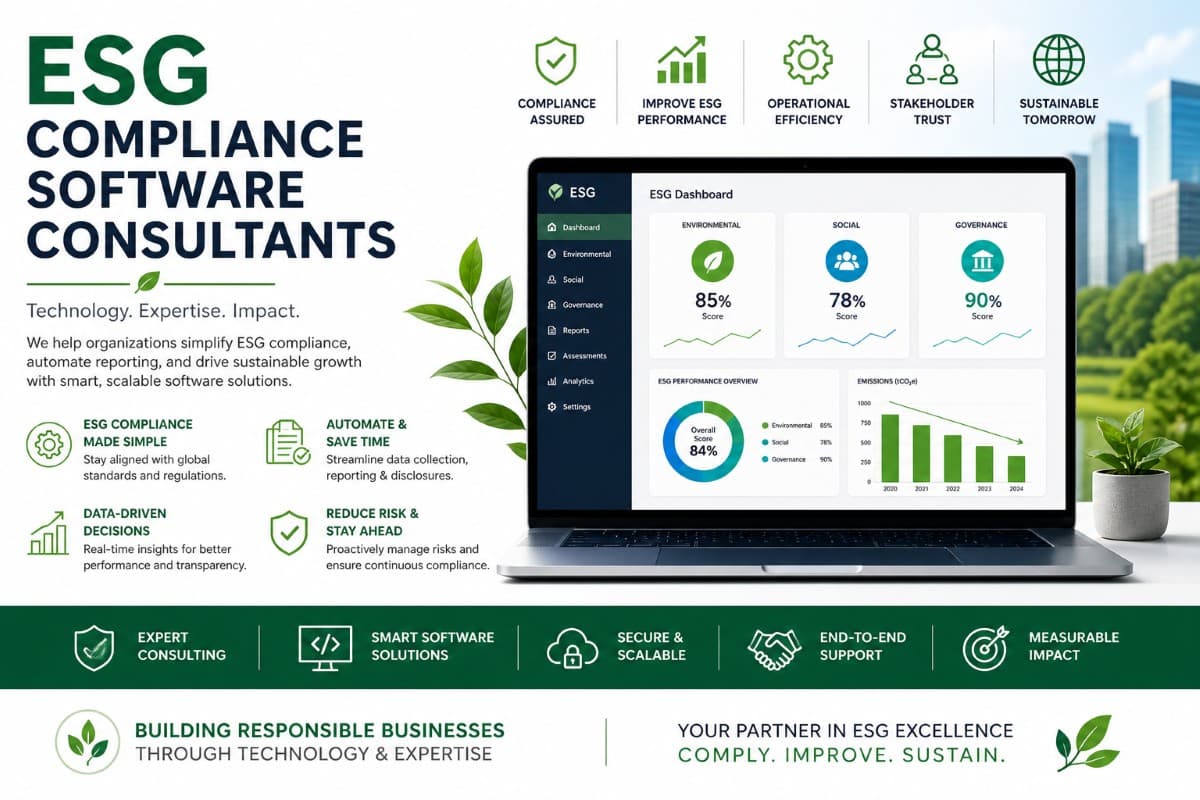
Looking for ESG consultants? Learn what they do, how they work, and how ESG compliance software helps businesses manage reporting, risks, and audits.
Explore real thoughts on compliance software, its role in risk management, audits, and how ESG compliance software helps businesses stay organized and ready.
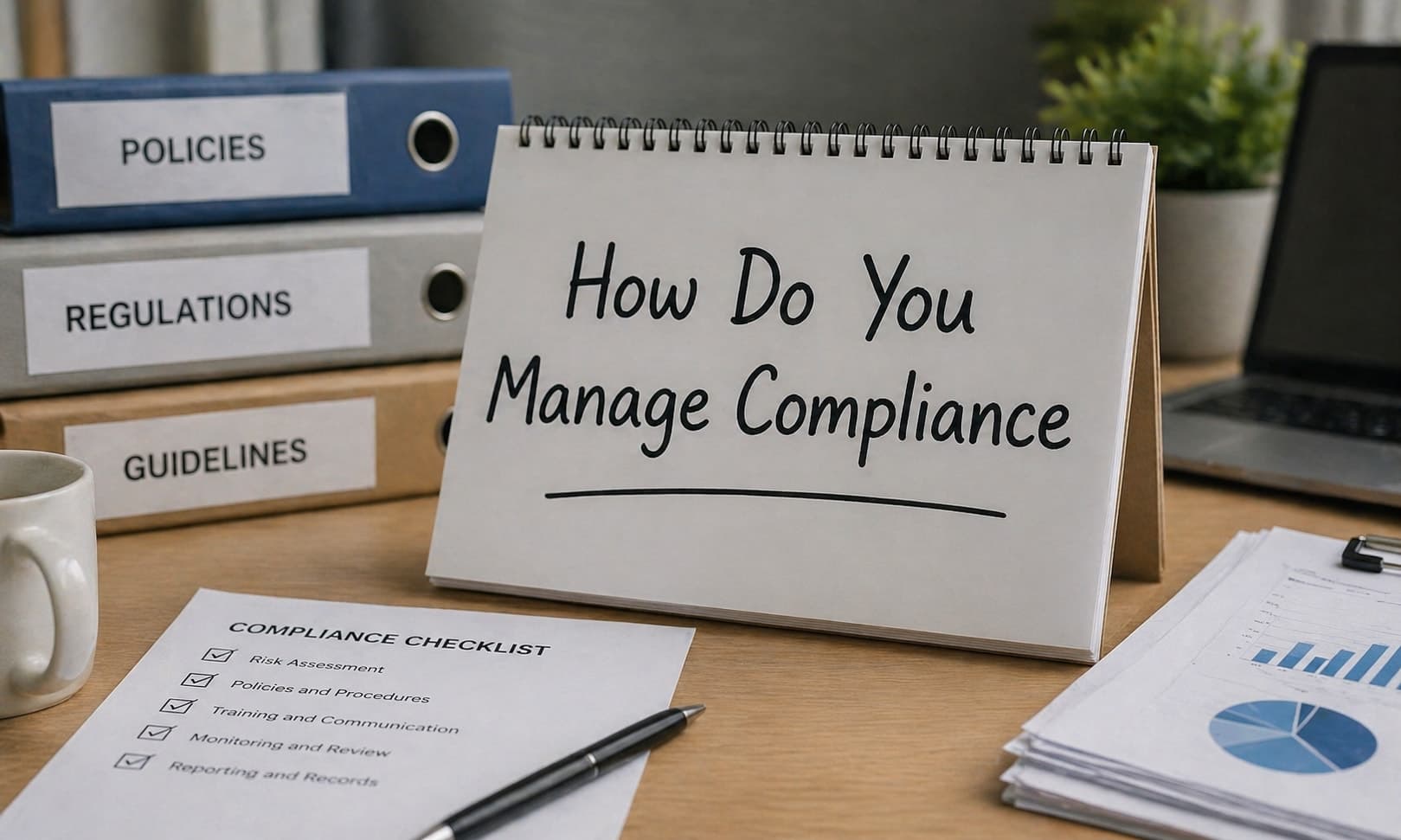
Learn how to manage compliance with simple systems, clear workflows, and ESG compliance software to stay audit ready and reduce risk across your business.