
Confusion In Regards To The ESG Regulatory Landscape
Confusion in regards to the ESG regulatory landscape is something most companies are dealing with right now. Rules are changing, regions follow different standards, and reporting expectations keep shifting.
If you are trying to stay compliant while also growing your business, this gets frustrating fast.
This guide breaks it down in simple terms so you can understand what is happening and what actually matters.
Why There Is So Much Confusion?
There is no single global ESG rulebook. That is the main issue. Different countries and regulators are moving at their own pace. Here is what creates the mess:
Multiple frameworks exist at the same time
Companies operate across different regions
Reporting formats are not aligned
New rules keep getting added without removing old ones.Because of this, confusion in regards to the ESG regulatory landscape keeps increasing instead of getting clearer.
Key ESG Regulations You Should Know
Even though there is no single system, a few regulations are shaping how companies report ESG data.
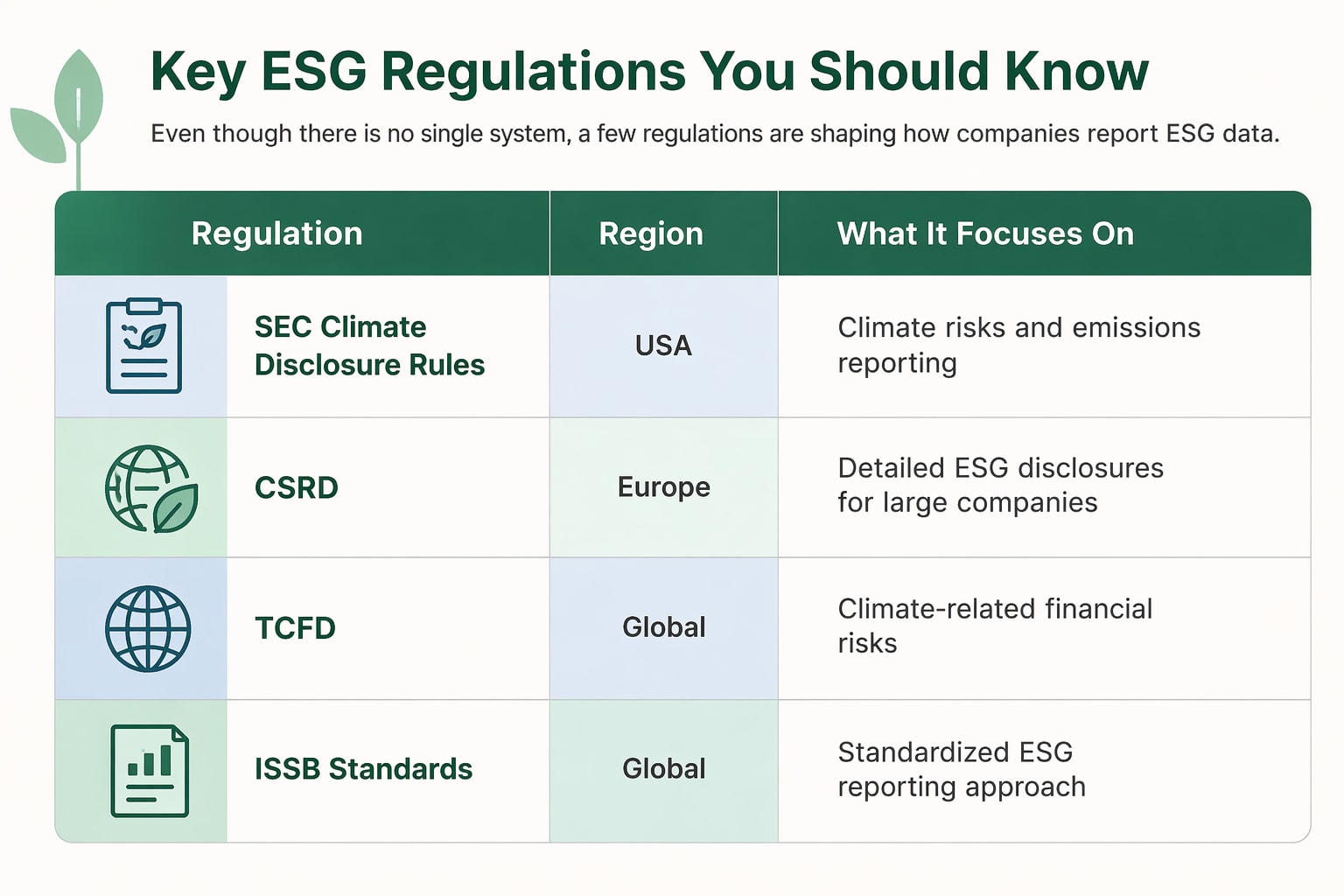
Regulation | Region | What It Focuses On |
SEC Climate Disclosure Rules | USA | Climate risks and emissions reporting |
CSRD | Europe | Detailed ESG disclosures for large companies |
TCFD | Global | Climate-related financial risks |
ISSB Standards | Global | Standardized ESG reporting approach |
If you are working in multiple markets, you often need to follow more than one of these at the same time.
That is where confusion in regards to the ESG compliance software becomes a real operational problem.
What This Means for Your Business?
This is not just about compliance. It affects how you run your business. Here is how:
You spend more time understanding rules than acting on them
Reporting becomes complex and expensive
Teams struggle to align data across departments
Risk of penalties increases if something is missed
For smaller teams, this feels even harder because resources are limited.
Common Mistakes Companies Make
Most companies are not failing because they ignore ESG. They fail because they approach it the wrong way.
1. Treating ESG as a One-Time Task
It is ongoing. Rules change. Data needs updates.
2. Following Too Many Frameworks at Once
Trying to comply with everything creates chaos.
3. No Clear Ownership
If no one owns ESG internally, it never works properly.
4. Overcomplicating Reporting
Simple and accurate reporting works better than complex systems no one understands.
How to Reduce ESG Confusion
You do not need to solve everything at once. Start with this approach:
Pick the most relevant regulation for your market
Focus on the data you can actually track
Assign one responsible team or person
Use tools that simplify reporting instead of adding layers
Review updates every quarter instead of reacting late
This is how you handle confusion in regards to the ESG regulatory landscape without getting stuck.
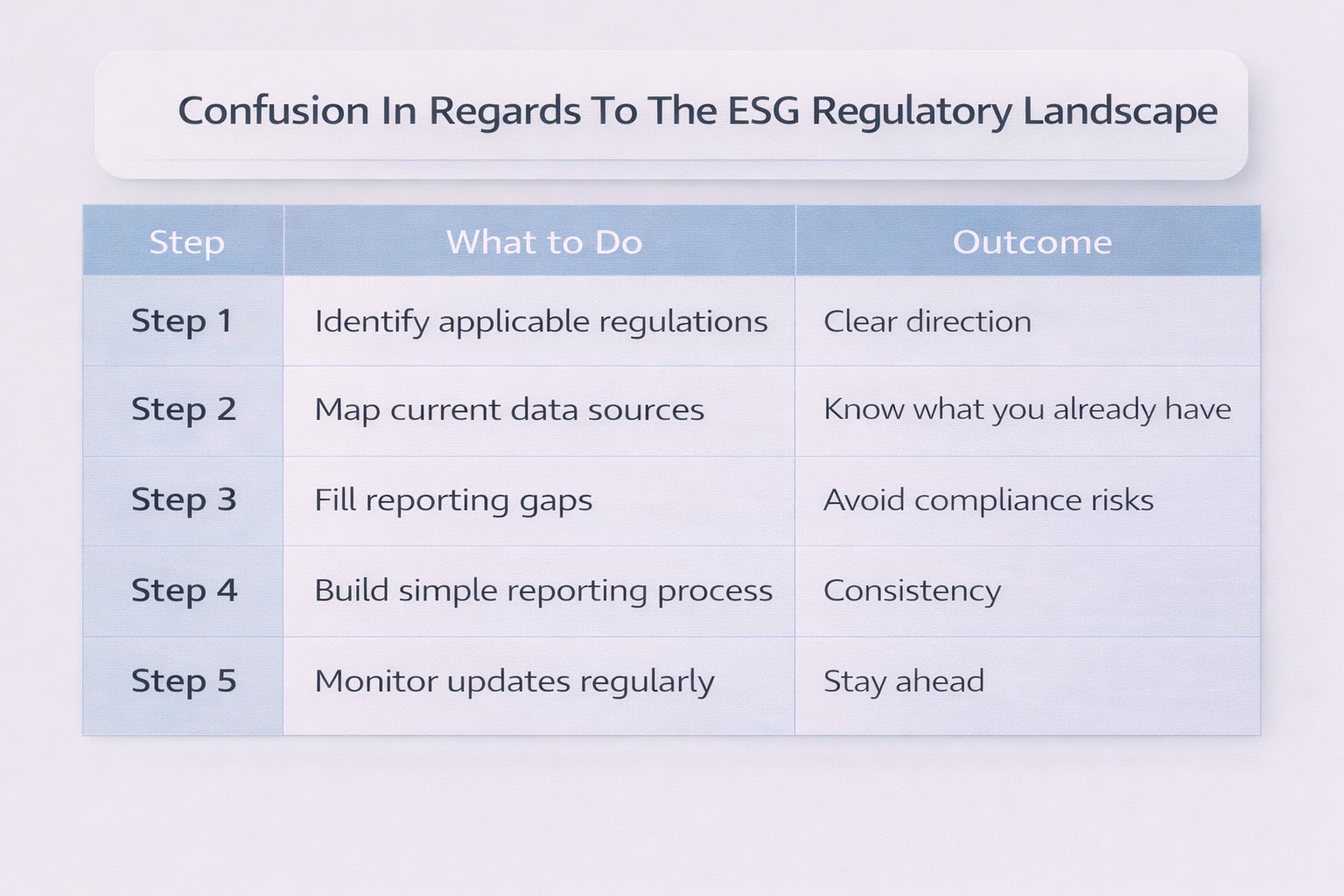
Simple ESG Action Plan
Step | What to Do | Outcome |
Step 1 | Identify applicable regulations | Clear direction |
Step 2 | Map current data sources | Know what you already have |
Step 3 | Fill reporting gaps | Avoid compliance risks |
Step 4 | Build simple reporting process | Consistency |
Step 5 | Monitor updates regularly | Stay ahead |
Frequently Asked Questions
Why is ESG regulation so confusing?
Because there is no global standard. Different regions follow different rules, and updates happen often.
Do small businesses need to follow ESG rules?
Not always directly, but clients and partners may require ESG data, so it still matters.
What is the biggest ESG challenge right now?
Keeping up with changing regulations while managing accurate reporting.
Is ESG reporting mandatory in the USA?
Some parts are becoming mandatory, especially around climate disclosures, but full enforcement is still evolving.
How do companies deal with multiple ESG frameworks?
Most focus on one main framework and align others where possible instead of trying to follow all equally.
Related Posts
Centralized ESG Compliance: Track And Manage Sustainability
Use centralized ESG compliance software to track sustainability goals, streamline reporting, monitor performance, and ensure regulatory responsibility.
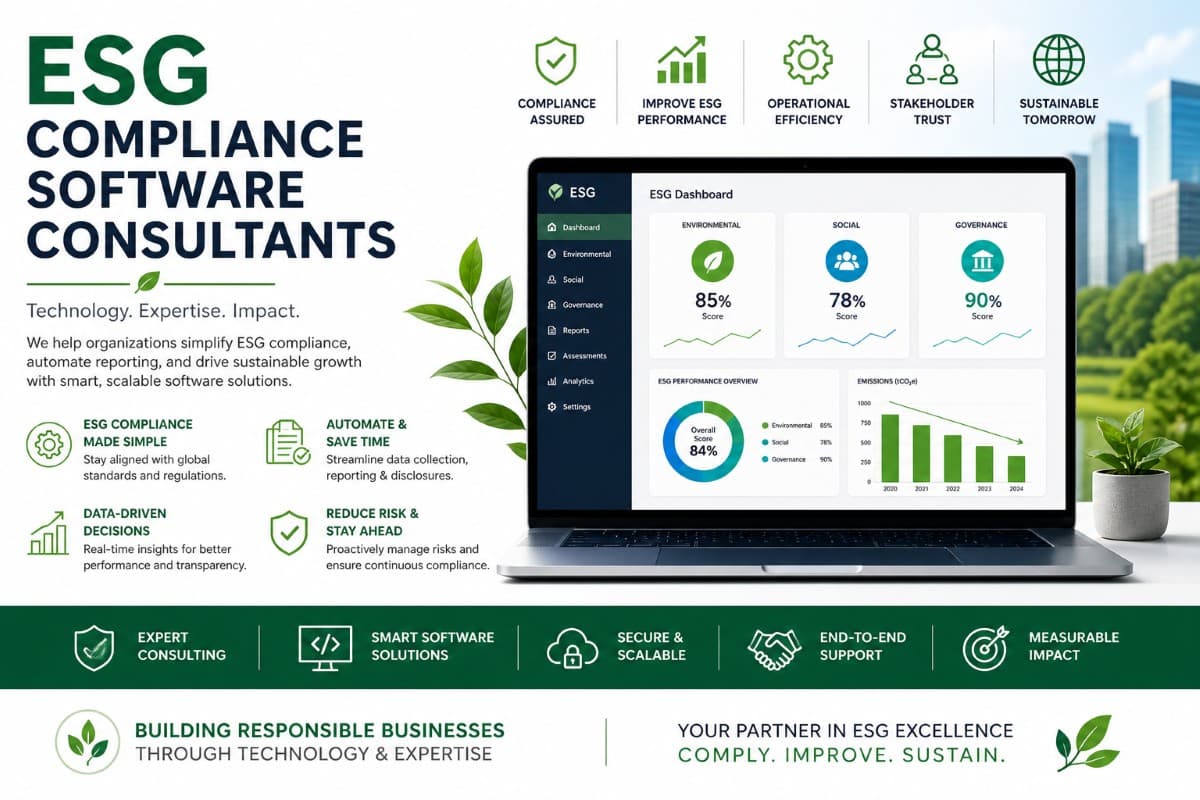
ESG Compliance Software Consultants
Looking for ESG consultants? Learn what they do, how they work, and how ESG compliance software helps businesses manage reporting, risks, and audits.