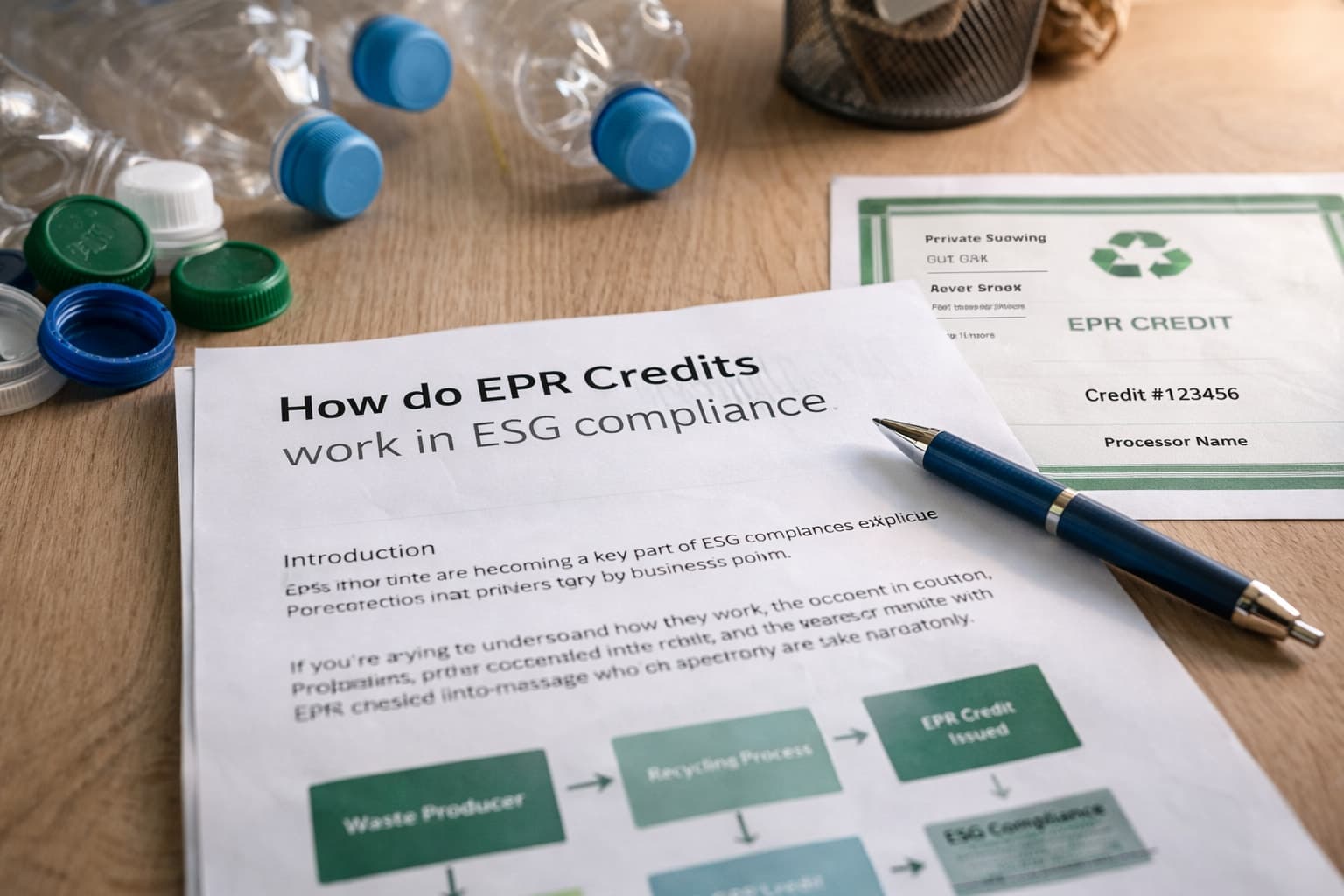

How Do EPR Credits Work In ESG Compliance
EPR credits are becoming a key part of ESG compliance, especially for companies that produce packaging or consumer goods.
If you are trying to understand how they work, the concept is simple. Companies are responsible for the waste they create, even after the product is sold. EPR credits help manage that responsibility in a structured way.
What Are EPR Credits
EPR stands for Extended Producer Responsibility.
It means producers must take responsibility for:
Collection of waste
Recycling or disposal
Meeting environmental targets
EPR credits act as proof that a company has fulfilled part of this responsibility. Instead of handling all waste directly, businesses can buy credits from authorized recyclers who have already processed waste. This system makes ESG compliance software easier to manage at scale.
How EPR Credits Work in ESG Compliance
Here is how the process works step by step:
1. Identify Waste Responsibility
Companies calculate how much waste they generate based on production and packaging.
2. Set Targets
Regulators define how much waste must be recycled or managed.
3. Work With Recyclers
Authorized recyclers process waste and generate EPR credits.
4. Purchase Credits
Companies buy credits equal to their waste responsibility.
5. Report Compliance
Credits are submitted as proof during ESG compliance reporting.
This is how EPR credits connect directly to ESG compliance and help companies meet environmental goals.
Why EPR Credits Matter
EPR credits are not just about rules. They affect business operations.
Here is why they matter:
They help meet environmental targets without building recycling systems
They reduce the risk of penalties
They improve sustainability reporting
They support circular economy efforts
For many companies, EPR credits are the simplest way to stay aligned with ESG compliance.
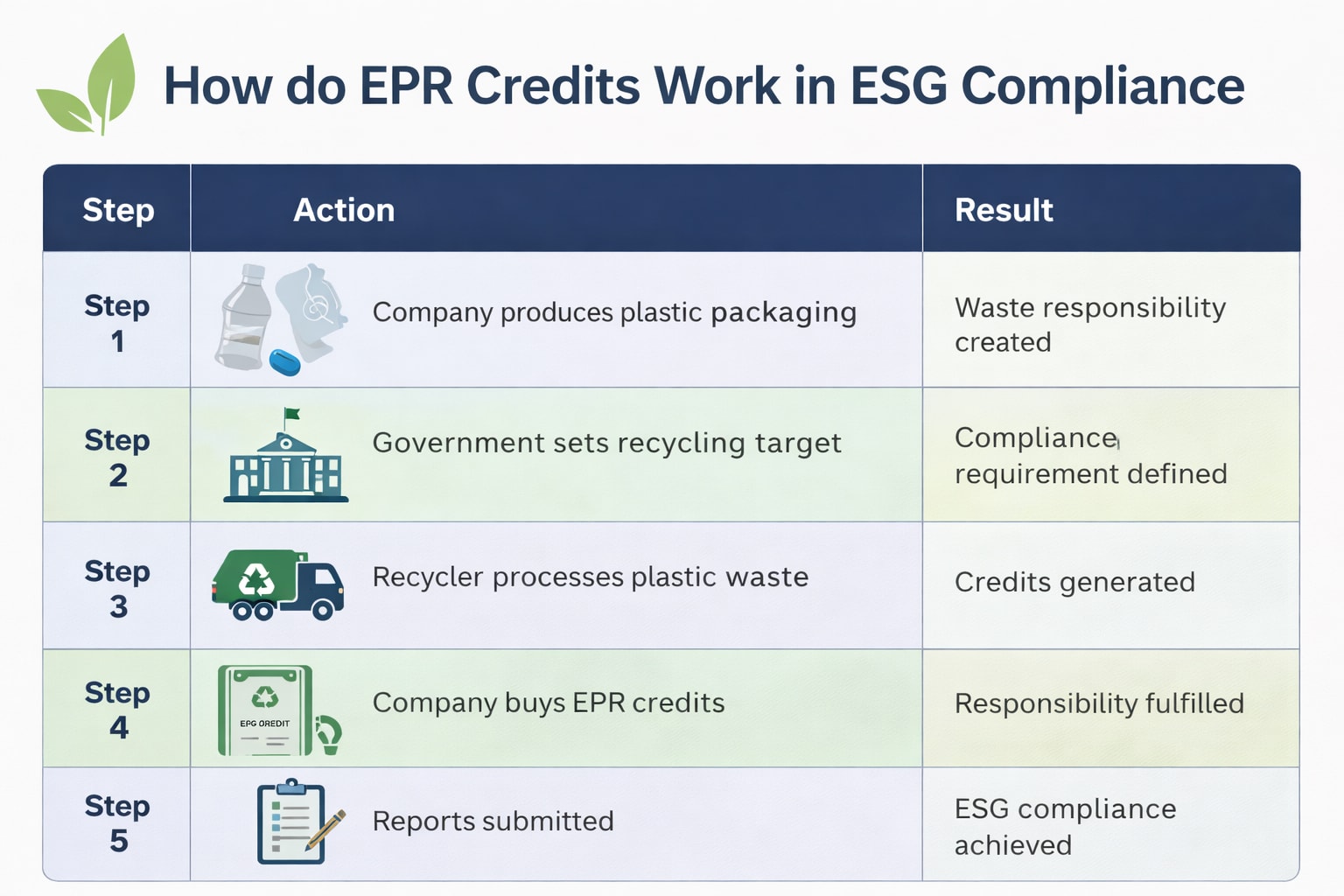
EPR Credits Example
Step | Action | Result |
|---|---|---|
Step 1 | Company produces plastic packaging | Waste responsibility created |
Step 2 | Government sets recycling target | Compliance requirement defined |
Step 3 | Recycler processes plastic waste | Credits generated |
Step 4 | Company buys EPR credits | Responsibility fulfilled |
Step 5 | Reports submitted | ESG compliance achieved |
Common Challenges
Even though the system looks simple, companies face a few issues:
Lack of clarity in regulations
Difficulty tracking accurate waste data
Limited availability of verified recyclers
Price variation in credit markets
These challenges can slow down ESG compliance if not handled properly.
How to Manage EPR Credits Better
A simple approach works best:
Track your packaging and waste data clearly
Work only with certified recyclers
Keep documentation ready for audits
Align EPR strategy with overall ESG compliance goals
Review targets regularly
This keeps the process smooth and avoids last-minute issues.
Frequently Asked Questions
What are EPR credits in simple terms?
They are proof that a company has met its waste recycling responsibility through authorized recyclers.
Are EPR credits mandatory for all businesses?
Only businesses that produce regulated waste like plastic or packaging need to comply.
How do EPR credits support ESG compliance?
They help companies meet environmental targets and show proof of responsible waste management.
Can companies generate their own EPR credits?
Yes, if they set up approved recycling systems, but most prefer buying credits.
Related Posts
Centralized ESG Compliance: Track And Manage Sustainability
Use centralized ESG compliance software to track sustainability goals, streamline reporting, monitor performance, and ensure regulatory responsibility.
ESG Compliance Software Consultants
Looking for ESG consultants? Learn what they do, how they work, and how ESG compliance software helps businesses manage reporting, risks, and audits.